Normal Wear and Tear vs Tenant Damage in Florida
What landlords can legally charge for… and the mistakes that lead to lawsuits, lost deposits, and angry tenants.
Most landlords don't lose money on rent.
They lose it when the tenant moves out.
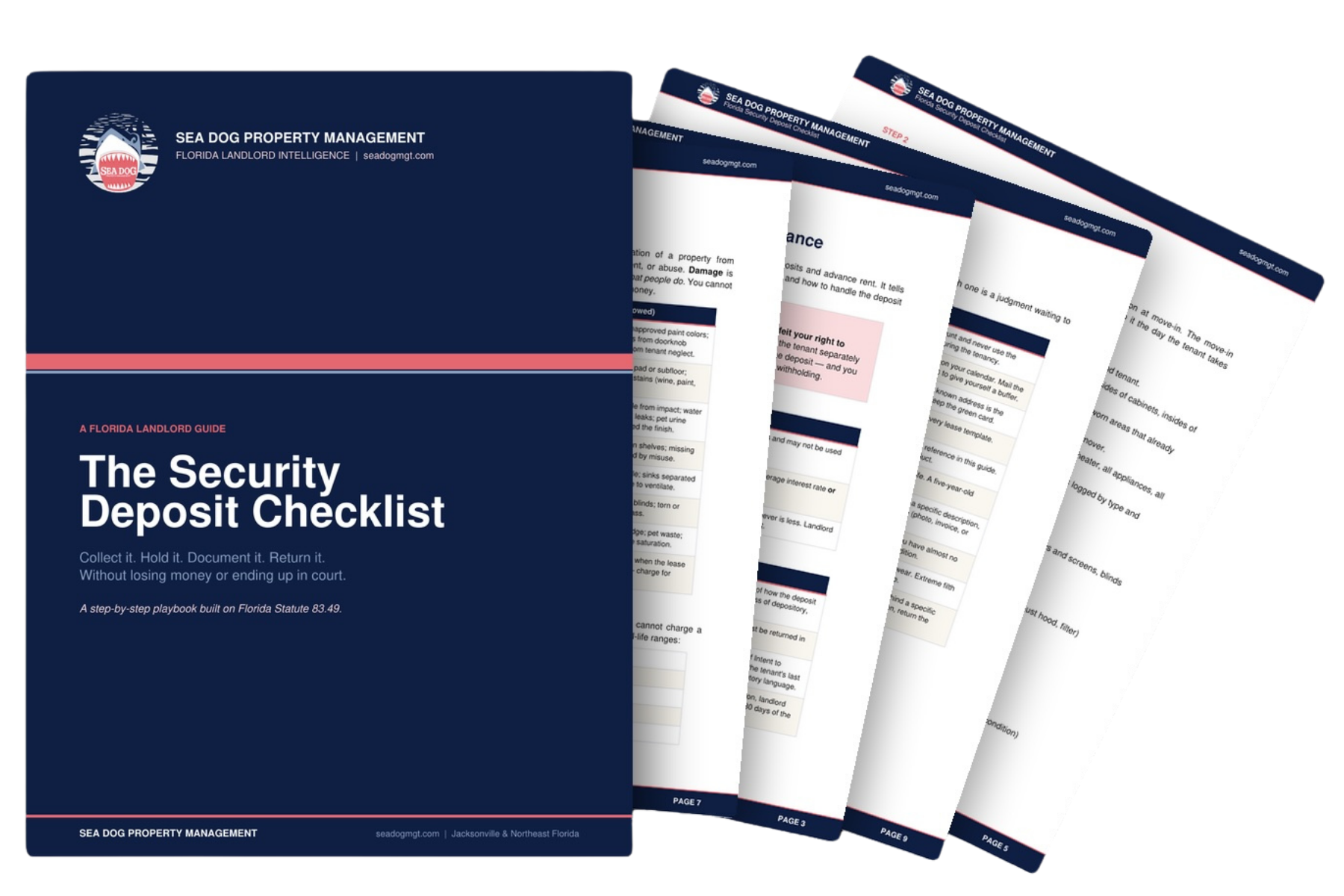
Download the Security Deposit Checklist
A step-by-step system to document, charge correctly, and avoid costly disputes under Florida law.
Why Most Florida Landlords Get This Wrong
Every year, Florida landlords lose money — not because of bad tenants, but because they don't have a system for handling security deposits.
- Tenants dispute deposit deductions with no documentation to fight back
- Landlords overcharge for normal wear — or undercharge for real damage
- Emotional arguments replace objective evidence
- Legal exposure under Florida Statute 83.49 turns a $500 dispute into a $5,000 problem
"Most disputes don't happen because of bad tenants… they happen because landlords don't have a system."
What Counts as Normal Wear and Tear vs Tenant Damage?
Normal Wear and Tear
These are the natural consequences of living in a property. Landlords cannot charge tenants for:
- • Faded or slightly discolored paint from sunlight
- • Minor scuffs and small nail holes in walls
- • Carpet wear in high-traffic areas over time
- • Loose door handles or hinges from regular use
- • Worn caulking around tubs and showers
Tenant Damage
Damage caused by misuse, negligence, or abuse. Landlords can deduct from the deposit for:
- • Large holes in walls or broken drywall
- • Broken fixtures, windows, or doors
- • Pet stains, scratches, or urine damage to flooring
- • Unauthorized paint colors or alterations
- • Burns, deep stains, or water damage from negligence
The Gray Area — Where Most Disputes Happen
These scenarios are where documentation makes or breaks your case:
Cleaning vs Damage
Is it a dirty oven or a damaged one? Move-in photos tell the story.
Aging vs Neglect
Did the carpet wear naturally or was it stained from misuse?
Appliance Failure vs Misuse
Did the dishwasher break from age or from improper loading?
Watch the Full Breakdown
If you haven't watched the full explanation, start here.
The Exact System Professional Managers Use
This is the same structured process used by professional property managers to:
- Document property condition at move-in and move-out
- Justify every deposit deduction with evidence
- Avoid legal disputes under Florida Statute 83.49
- Protect rental income from preventable losses
Get the Checklist
Free download. No spam. Just the system.
Why This Matters More Than You Think
Timing Is Everything
Miss the 30-day notice window and you may owe the full deposit back — even if damage exists.
Documentation Wins
Courts favor timestamped photos and written records over verbal claims every time.
Florida Law Is Strict
Statute 83.49 prescribes exactly how deposits must be held, accounted for, and returned.
Small Mistakes, Big Costs
A $300 carpet dispute becomes a $3,000 legal headache without a proper system.
"We've seen landlords lose thousands over what could have been avoided with proper documentation."
What Happens When This Process Breaks Down
Without a system, here's what happens every time a tenant moves out:
- Disputes escalate because there's no baseline documentation
- Tenants push back on deductions because they weren't documented at move-in
- Claims get challenged and landlords can't prove their case
- Owners lose leverage — and sometimes the entire deposit
Serving Landlords Across Central Florida & The Space Coast
Whether you own a single rental or a growing portfolio, the security deposit rules apply everywhere in Florida. We help landlords in: