The five maintenance calls we get most, and what to try first
AC not cooling, a running toilet, a dead disposal, a chirping smoke alarm or no hot water: the safe first step for each, and when to call instead of submitting a request.
Don HarkinsPublished 7 min read
Key takeaways
- Fire, flooding, gas, sewage or no water is a phone call to the number at the bottom of this page, not a portal ticket
- Ice on the AC coil means turn it off, change the filter and wait for the thaw before anything else
- Never put a hand inside a garbage disposal; the red reset button and a quarter-inch Allen wrench fix most of them
- A chirp every 30 to 60 seconds is a battery or an expired unit; a continuous alarm means get out and call 9-1-1
- F.S. 83.51 puts structure, plumbing, hot water and smoke detectors on the landlord, and neglect-caused damage on the tenant
In this article
- Is this an emergency, or a portal request?
- What should I try first when the AC is not cooling?
- What about a running toilet or a slow drain?
- Why did the garbage disposal stop, and is it safe to fix?
- What about a chirping smoke detector, no hot water or a dead appliance?
- What does Florida law make the landlord fix, and what is on me?
- What this means in Central Florida and on the Space Coast
- Next step
Five calls make up most of Sea Dog's maintenance queue: an air conditioner not cooling, a running toilet or slow drain, a garbage disposal that hums or does nothing, a chirping smoke detector, and no hot water or an appliance that quit. Each has a safe first step that takes under ten minutes. If what you have is fire, flooding, a gas smell, sewage or no water, skip this article and call the number at the bottom of this page.
Is this an emergency, or a portal request?
Call the number at the bottom of this page for fire or smoke (call 9-1-1 first), active flooding or a burst pipe, a gas smell (leave the home, then call from outside), sewage backing up, no water, or electrical sparking. A dead air conditioner in summer heat is urgent too, so call.
Everything else goes through the resident portal, the Resident Login link at the top of this site. A good request has the symptom, what you already tried, when it started, and a photo or short video. Say whether we may enter if you are not home; F.S. 83.53 requires at least 24 hours' notice for a repair visit, between 7:30 a.m. and 8:00 p.m., except in an emergency.
What should I try first when the AC is not cooling?
Most warm-air calls end at step 3.
- Set the thermostat to Cool and the fan to Auto, with the setpoint at least 5 degrees below the room temperature. Replace the batteries if the screen is dim.
- Look at the indoor unit and the copper lines. If you see ice, turn the system off at the thermostat now and let it thaw for 1 to 4 hours. Running it frozen can destroy the compressor.
- Pull the air filter. If it is gray or sagging, replace it with the same size and rating. A clogged filter is the most common cause.
- Open every supply vent and move anything blocking the large return grille.
- Reset a tripped breaker once. If it trips again, stop and submit a request.
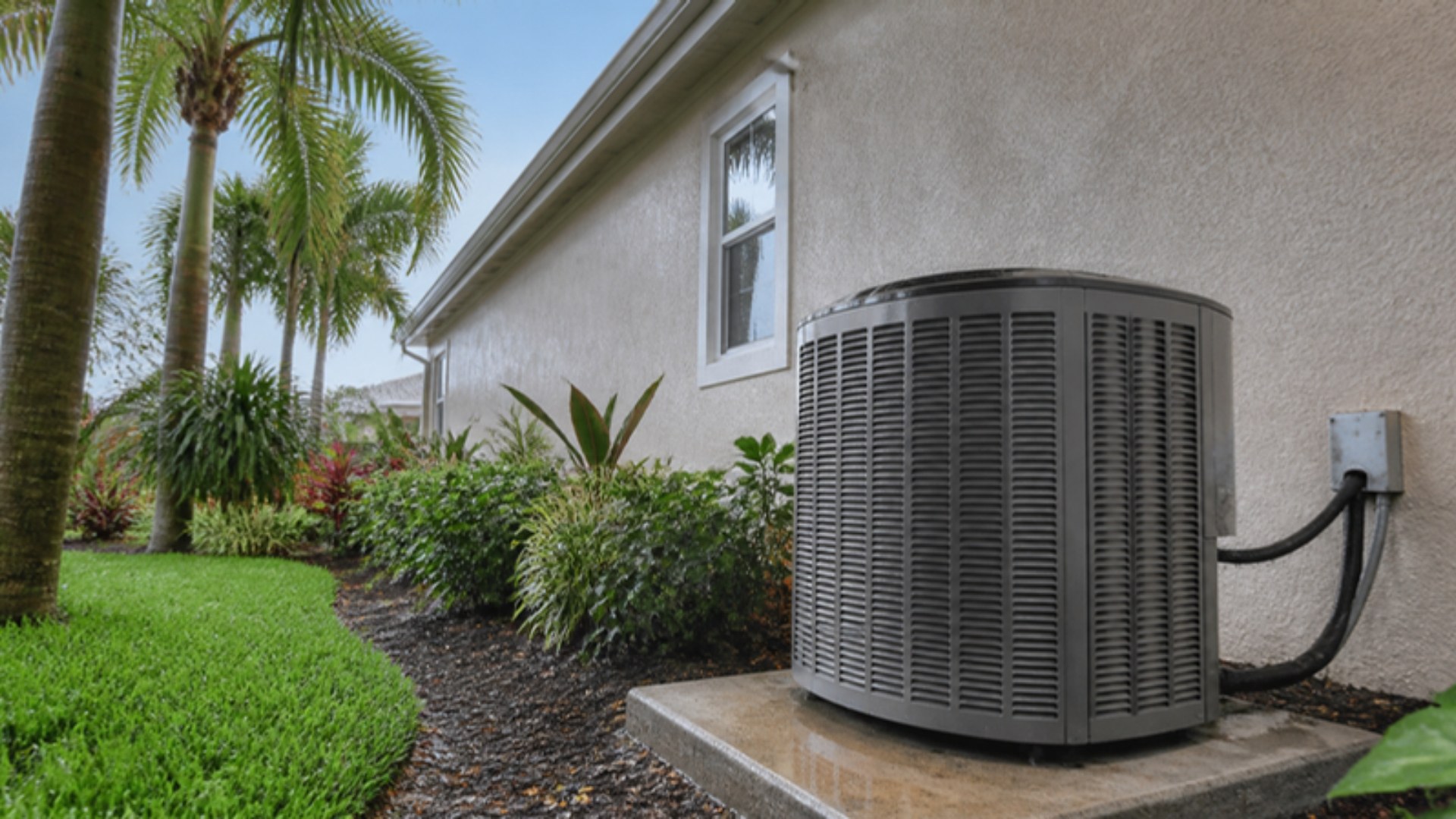
- Clear leaves and fronds from a 2 to 3 foot radius around the outdoor unit. Do not open it.
If the air is still warm an hour later, submit the request; the full version, with the vinegar drain-line flush, is in the air conditioner guide. Who pays depends on your lease; see our HVAC post.
Key point: Ice on the coil means off, not colder. Turn the system off, change the filter, wait for the thaw, then decide.
What about a running toilet or a slow drain?
A toilet that trickles or refills on its own has three parts that matter: the flapper, the chain and the fill valve. Lift the tank lid and check that the chain has 1 to 2 links of slack. If water is spilling into the overflow tube, adjust the float so the water sits about an inch below the top of the tube. Then put a few drops of food coloring in the tank, wait 15 to 30 minutes without flushing, and look at the bowl; color there means the flapper leaks, a routine request. Water on the floor around the base is different: stop using that toilet and submit a request today. See the running toilet guide.
For a slow drain, first run water in other fixtures. One slow drain is a local clog; two or more at once, or a toilet that gurgles when the sink drains, is a main-line problem: stop running water and submit an urgent request. For a single fixture, pull the stopper and remove the hair, try half a cup of baking soda followed by a cup of white vinegar and a hot-water flush, then a cup plunger. Never use a chemical drain cleaner; they damage pipes, burn skin and most Sea Dog leases prohibit them. See the clogged drains guide.
Why did the garbage disposal stop, and is it safe to fix?
Never put your hand inside a disposal, on or off. The fix depends on the sound. Silence means no power: re-seat the plug under the sink, reset the kitchen breaker once, then press the small red reset button on the bottom of the unit until it clicks. A hum with no grinding means a jam: turn the wall switch and the breaker off, fit a quarter-inch Allen wrench into the hex hole on the bottom of the unit, and rock it back and forth until it spins freely, then press reset. A unit that ran for a second and stopped overheated: wait 10 minutes, press reset and try again with cold water running. Anything leaking, smoking or re-tripping the breaker is a request. The garbage disposal guide lists what to keep out of it.
What about a chirping smoke detector, no hot water or a dead appliance?
A single chirp every 30 to 60 seconds is almost always a low battery. A continuous loud pattern is an alarm: get everyone out, call 9-1-1 from outside, and do not go back in. For a chirp, read the manufacture date on the back; ten years or older means replacement, so submit a request. Otherwise put in a fresh battery, hold the test button for 15 to 20 seconds, then press test once. A sealed unit with no battery door needs replacing; never remove or cover an alarm to quiet it. See the smoke detector guide.
No hot water on an electric heater is often a tripped breaker; reset it once. If it is still cold an hour later, or there is water around the tank base, submit a request and, for a leak, close the cold supply valve on top of the tank. Do not work on a gas water heater yourself; a gas smell means leave and call. The no hot water guide walks through it. For any other appliance, check the plug, the GFCI reset and the breaker once, then the troubleshooting library.
What does Florida law make the landlord fix, and what is on me?
F.S. 83.51(1) requires the landlord to comply with building, housing and health codes, or where none apply, to keep the roofs, windows, doors, floors, steps, porches, exterior walls, foundations and all structural components in good repair, keep the plumbing in reasonable working condition, and install screens at move-in. For units other than a single-family home or duplex, F.S. 83.51(2) adds extermination, locks and keys, clean common areas, garbage removal, heat in winter, running water and hot water. At the start of a single-family or duplex tenancy, the landlord must install working smoke detectors. Air conditioning is not on the statutory list; it is in your lease.
F.S. 83.51(4) adds that the landlord is not responsible for conditions caused by the tenant's negligence or wrongful act, so a disposal jammed with bones, a drain clogged by wipes, or a coil frozen under a never-changed filter can be charged to you under the lease. Your side in a typical Sea Dog lease is specific: change the filter monthly, keep smoke detector batteries fresh, use drain strainers, keep chemical cleaners and tank tablets out of the plumbing, and report problems early. If something on the landlord's list goes unfixed, put it in writing; F.S. 83.56(1) gives a tenant remedies only after written notice and 7 days.
What this means in Central Florida and on the Space Coast
Orlando's morning humidity averages 88% across the year and 91% in August and September, according to the Florida Climate Center, which is why the drain line and the filter cause most inland AC calls. On the coast, from Cape Canaveral to Melbourne Beach, salt air corrodes the outdoor unit, so a monthly low-pressure rinse of the exterior fins helps. Hurricane season runs June 1 to November 30, and the days after a storm bring two predictable calls: smoke detectors chirping after the outage drained their backup batteries, and drains backing up from an overwhelmed municipal sewer. Both are requests unless sewage is coming up inside the home.
Next step
Try the first step for your symptom, then submit the request through the resident portal with what you saw and what you tried. When your lease ends, the same habits, a clean filter, fresh batteries and clear drains, are items on the move-out checklist.
Frequently asked questions
Will I be charged for a maintenance visit?
Not for normal wear and tear. Under F.S. 83.51(4), a landlord is not responsible for conditions caused by a tenant's negligence, so a repair traced to misuse, such as a disposal jammed with bones or a coil frozen under a never-changed filter, can be billed back under the lease. Every other repair on the landlord's list is on the owner. The work order in the portal shows the determination for each request.
How fast will someone come out?
Sea Dog's published commitments are a returned call within 30 minutes and a vendor dispatched within 2 hours for emergencies, triage within 4 business hours and a vendor on site within 24 hours for urgent items such as no hot water or a refrigerator failure, and triage within 1 business day with work scheduled in 3 to 5 business days for routine requests. Photos and a clear description move everything faster.
Does the landlord have to fix the air conditioning?
F.S. 83.51 lists heat, running water and hot water but does not mention air conditioning, so the obligation comes from your lease. Sea Dog leases provide AC and treat a summer outage as urgent. If a written request for any item the landlord is responsible for goes unanswered for 7 days, F.S. 83.56(1) gives you the right to terminate the lease, which is why the request should be in writing.
Can the landlord enter my home to make the repair while I am out?
Yes, with notice. F.S. 83.53 says reasonable notice for repairs is at least 24 hours, during the hours of 7:30 a.m. to 8:00 p.m., and a tenant may not unreasonably withhold consent. The landlord may enter at any time to protect the premises or in an emergency. When you submit a request, say whether entry is fine if you are not home, and whether there are pets inside.
Something not working in your home?
Our troubleshooting guides cover the most common calls and what to try before you submit a request.

Don Harkins
Broker and Owner, Sea Dog Property Management
Don Harkins is a licensed Florida real estate broker (CQ1068457) who has managed rental homes across Central Florida and the Space Coast for more than 13 years. He writes about the decisions that cost owners money and how to avoid them.
About Sea Dog